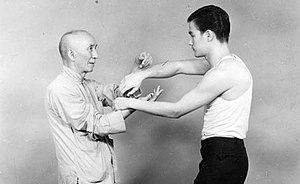
Welcome to the world of Wing Chun.
In this blog, let’s unravel the rich history and philosophy of Wing Chun, exploring its origins, the story behind its invention, and the unique principles that make it a distinctive martial art.
1. The Origins of Wing Chun
Wing Chun, a style of Chinese martial arts, has a history as captivating as its techniques. The legend traces back to the turbulent times of the Qing Dynasty in China.
The story begins with a woman named Yim Wing Chun, who, according to folklore, was taught a unique fighting style by a Buddhist nun named Ng Mui.
This style, which came to be known as Wing Chun, was designed to be practical, efficient, and suitable for individuals of all sizes and strengths.
2. The Legend of Yim Wing Chun
Legend has it that Yim Wing Chun was pursued by a persistent suitor, and to defend herself, she sought the guidance of Ng Mui.
Together, they developed a martial art that emphasized redirecting an opponent’s force and using quick, precise strikes.
The legend of Yim Wing Chun and Ng Mui adds a layer of mystique to the art, highlighting its origins in real-life challenges and the empowerment of a woman in historical China.
3. The Art of Efficiency
Wing Chun stands out for its emphasis on practicality and efficiency in combat.
Unlike styles that rely on brute force, Wing Chun focuses on redirecting and controlling an opponent’s force, using minimal movement.
The forms and techniques are designed to be straightforward, direct, and effective in close-quarters combat.
This makes Wing Chun particularly suitable for self-defense situations.
4. Centerline Theory
At the heart of Wing Chun is the Centerline Theory, a concept that defines the most direct and efficient path to an opponent’s core.
Practitioners are trained to control the centerline, both defensively and offensively.
This strategic approach allows Wing Chun practitioners to dominate the fight by maintaining a position of advantage and launching precise attacks.
5. Economy of Movement
Wing Chun’s philosophy embraces the economy of movement, focusing on the most direct actions to achieve a desired result.
The art avoids flashy, unnecessary techniques, emphasizing simplicity and effectiveness.
This principle makes Wing Chun accessible to individuals of varying physical abilities and ages, aligning with the belief that martial arts should be practical for everyone.
6. Chi Sao: The Art of Sensitivity
Chi Sao, or “sticky hands,” is a unique training method in Wing Chun.
Practitioners engage in controlled sparring, maintaining constant contact with their partner’s arms.
This practice enhances sensitivity to the opponent’s movements, allowing Wing Chun practitioners to respond swiftly and effectively.
It’s a training method that exemplifies the art’s focus on close-quarters combat and adaptability.
7. The Modern Wing Chun Landscape
Wing Chun has evolved over the centuries and has spread across the globe.
Today, you’ll find Wing Chun schools in various countries, each with its interpretation and emphasis on specific aspects of the art.
Modern practitioners continue to explore and refine the techniques, keeping the essence of Wing Chun alive while adapting to the needs of contemporary martial artists.
Final Thoughts
In conclusion, Wing Chun is more than just a martial art; it’s a journey into history, philosophy, and practical self-defense.
From its legendary origins with Yim Wing Chun and Ng Mui to its emphasis on efficiency, the Centerline Theory, and the art of sensitivity through Chi Sao, Wing Chun remains a fascinating and effective martial art.
Whether you’re a seasoned practitioner or a curious observer, delving into the world of Wing Chun unveils a martial art that marries tradition with adaptability, making it a timeless and respected form of self-defense.
Recommended Articles:
 Provide & Protect
Leave a comment